For Adults · Compounded GLP-1

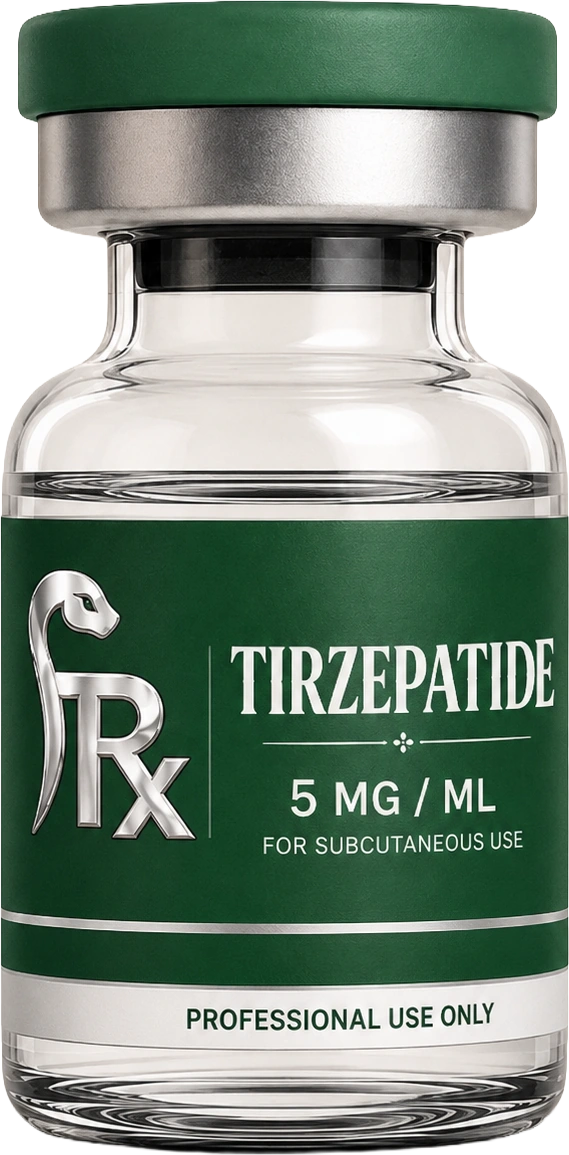
Tirzepatide

Two hormone pathways, one weekly dose.

The dual-action GIP/GLP-1 weight-loss medication — the generic form of Mounjaro® and Zepbound® — prescribed online, reviewed by licensed providers, and shipped from U.S. pharmacies. A once-weekly injection, titrated to your body.

One flat price — the same at every dose

2.5 mg 5 mg 7.5 mg 10 mg 12.5 mg 15 mg

$399/mo Every dose, one price

Start your online visit →

A few questions about your health, then a licensed provider reviews your answers.

100% Online Licensed Providers Discreet Shipping No Insurance
ForbiddenRx Tirzepatide
At a glance
Cadence
Once weekly
Titration
2.5 → 15 mg
Form
Subcutaneous injection
Class
Dual GIP + GLP-1
Prescription
Provider-reviewed
For
Adults
The basics

What is tirzepatide?

What it is
A compounded prescription injection
Also known as
Generic Mounjaro® / Zepbound®
Drug class
Dual GIP + GLP-1 receptor agonist
Made by
U.S. 503A compounding pharmacy
Cadence
Once-weekly subcutaneous injection
Titration
2.5 mg up to 15 mg — provider-set
Prescription
Provider-reviewed · no insurance required
Shipping
Discreet, unmarked · all 50 states
Start your online visit →

Tirzepatide is a dual GIP/GLP-1 receptor agonist for medical weight management — the active ingredient in Mounjaro® and Zepbound®. By working on two appetite-regulating gut-hormone pathways instead of one, it has become one of the most talked-about weekly injections in weight care.

It is a once-weekly subcutaneous injection, prescribed online after a licensed provider reviews your health history. Your dose starts low (2.5 mg) and is stepped up gradually over months, so your body can adjust and side effects stay more manageable. Both compounded tirzepatide through 503A partner pharmacies and branded Mounjaro® / Zepbound® are available where appropriate.

Tirzepatide is intended for adults working on their weight under the guidance of a provider, paired with nutrition and lifestyle changes. Your provider selects the right starting dose and titration pace for you during your online visit.

Understanding the cause

Why is weight so hard to lose on your own?

Weight is driven by biology, not just willpower — your appetite, fullness, and metabolism are governed by gut hormones like GIP and GLP-1, and for many people those signals push back hard against dieting. That is why cutting calories alone so often stalls: the body defends its set-point by increasing hunger and slowing metabolism, making lost weight easy to regain. Tirzepatide works by mimicking two of those natural hormones at once, which is what sets it apart from single-receptor medications.

It's biology, not a lack of discipline

Appetite hormones, metabolism, and set-point all work against sustained weight loss — which is why so many people plateau despite real effort.

It's a treatable, medical condition

Weight is treatable with the right support. If diet and exercise alone haven't moved the number, that's reason enough to talk to a provider about whether medication fits.

Know the difference

Prescription GLP-1 vs. OTC diet pills vs. diet & exercise alone — what's the difference?

The short answer: diet and exercise address behavior, over-the-counter diet pills and supplements make broad claims with little provider oversight, and a prescription GLP-1 like tirzepatide is a provider-directed medication that works on the appetite hormones themselves.

 Diet & exercise aloneOTC diet pills / supplementsCompounded GLP-1 (Rx)
What it targetsBehavior and habitsBroad, unverified claimsAppetite & fullness hormones
How you take itDaily effort, ongoingDaily pills, self-directedOne weekly injection
FormulaNot applicableOne-size-fits-allPrepared per prescription
Provider involvedNoNoYes — reviews your health history first
Titrated to youNoNoYes — dose stepped up over months
Addresses appetite biologyIndirectlyNoDirectly, via GIP + GLP-1

Many people try diet and exercise first, plateau, then reach for OTC pills that promise a lot and deliver little. A prescription GLP-1 is the next step up: a once-weekly medication with a provider in the loop and a dose built around your body instead of an average.

How it works

How does tirzepatide work?

It works by mimicking two natural gut hormones — GIP and GLP-1 — that together regulate appetite, digestion, and blood sugar, rather than acting on a single pathway the way older GLP-1 medications do.

I

Curbs appetite

By acting on both GIP and GLP-1 receptors in the brain's appetite centers, tirzepatide helps you feel satisfied sooner and think about food less between meals.

II

Slows gastric emptying

It slows how fast your stomach empties, so you feel full for longer after a meal and are less prone to grazing.

III

Steadies blood sugar

The dual-receptor action supports steadier post-meal blood sugar — one of the reasons tirzepatide was first developed for type 2 diabetes.

Who it's for

Who is tirzepatide for?

It's for adults working on their weight under the guidance of a licensed provider, paired with nutrition and lifestyle changes.

Adults ready to work on their weight

Those pairing medication with real nutrition and lifestyle change, under a provider who reviews their history first.

People who want a once-weekly routine

A single weekly injection fits into real life — no daily pill or routine to keep up with.

Those drawn to dual-action

Because it acts on two hormone pathways, some patients experience greater weight loss than on single-agonist GLP-1s, though results vary.

Switching from another GLP provider

Already on a GLP-1 elsewhere? A provider can review your history and continue or adjust your plan.

When it's not the right fit

Tirzepatide is not for those with a personal or family history of medullary thyroid carcinoma (MTC) or Multiple Endocrine Neoplasia syndrome type 2 (MEN2), or a history of pancreatitis. If you'd rather start with a single-agonist GLP-1, Semaglutide is an option — mention your goals and full history in your visit.

How to get it

How do I get tirzepatide online?

You complete a private online visit, a licensed provider reviews it, and — if appropriate — your prescription ships to your door. No insurance required, no in-person appointment, no waiting room.

Complete your online visit

Answer a short set of health questions and share your height and weight — on your own time, no appointment.

Provider review

A provider licensed in your state reviews your information and, if tirzepatide is appropriate, writes your prescription and titration plan.

Shipped to your door

Your medication ships discreetly from a U.S. pharmacy, with ongoing provider support as you titrate. Automatic refills available.

Pricing is shown at checkout — no insurance needed, no hidden fees.

Using it & safety

How do I take it, and is it safe?

You inject a small dose under the skin once a week on the same day, starting low and stepping up gradually — and your provider sets the exact strength and pace for you based on how you tolerate it.

How to take tirzepatide

Schedule
One subcutaneous injection per week, on the same day each week.
Titration
Start at 2.5 mg weekly and step up gradually over months toward higher strengths as tolerated.
Timing
Inject around the same time each week — with or without food.
Strengths
2.5 · 5 · 7.5 · 10 · 12.5 · 15 mg — your provider selects the right dose and pace.
Support
Message your care team anytime; anti-nausea support is available if needed.
Missed dose
If you miss a week, ask your provider about timing before your next injection.
Weekly injectionTitratedProvider-set

Safety & side effects

⚠ Not right for everyone

Tirzepatide is not for those with a personal or family history of medullary thyroid carcinoma (MTC) or Multiple Endocrine Neoplasia syndrome type 2 (MEN2), or a history of pancreatitis. Tell your provider about your full medical history and every medication you take before starting.

The most common side effects are gastrointestinal, usually mild, and tend to ease as your body adjusts. Possible side effects include:

  • Nausea
  • Diarrhea
  • Constipation
  • Reduced appetite
  • Injection-site reactions

Starting low and titrating slowly is the main way nausea is minimized; eating smaller, lower-fat meals and staying hydrated can help. Seek immediate care for severe or persistent abdominal pain (possible pancreatitis) or signs of an allergic reaction.

Compare your options

Which treatment fits you?

A side-by-side look at the weight-loss options available through ForbiddenRx. Your provider helps you choose what's right.

TreatmentWhat it isCadenceRouteFormRx required
Tirzepatide
Popular
Dual GIP + GLP-1 agonistWeeklyInjectionCompoundedYes
SemaglutideGLP-1 receptor agonistWeeklyInjectionCompoundedYes
Oral SemaglutideGLP-1 in daily tablet formDailyTabletCompoundedYes
Mounjaro® / Zepbound®Brand-name tirzepatideWeeklyInjectionBranded penYes
Questions, answered

Tirzepatide FAQ

Tirzepatide vs. semaglutide — what's the difference?

The core difference is how they work. Tirzepatide is a dual agonist — it acts on both the GIP and GLP-1 receptors — while semaglutide acts on the GLP-1 receptor alone. Both are once-weekly injections used for weight management, but the dual-receptor action is what distinguishes tirzepatide. Which one is right for you is a decision to make with your provider based on your history and goals.

How much weight can I expect to lose?

Results are highly individual and depend on your starting point, dose, how far you titrate, and the nutrition and activity changes you make alongside the medication. Some people lose more on tirzepatide than on single-agonist GLP-1s, but there are no guarantees — your provider will help set realistic, personalized expectations.

What are the side effects, and how do I manage nausea?

The most common side effects are gastrointestinal — nausea, diarrhea, constipation, and reduced appetite — and they're usually mild and tend to ease as your body adjusts. Starting low and titrating slowly is the main way nausea is minimized. Eating smaller, lower-fat meals and staying hydrated can help, and anti-nausea support is available through your care team if needed.

How is tirzepatide taken, and how often?

Tirzepatide is a once-weekly subcutaneous injection — taken on the same day each week, with or without food. Your provider sets your starting dose and titration schedule and adjusts it over time based on your response and tolerance.

Why does the dose start low and go up?

Titration — starting at 2.5 mg and stepping up gradually over months — gives your body time to adjust and keeps gastrointestinal side effects more manageable. Increasing too quickly tends to worsen nausea, so your provider raises the dose in stages based on how you're tolerating it.

Do I need insurance?

No. ForbiddenRx works entirely without insurance — you complete an online visit and, if tirzepatide is appropriate, your medication ships directly to you. A prescription is not guaranteed and is subject to provider review of your health history.
Credibility you can verify

Care held to a higher standard

Licensed Providers

U.S. board-certified clinicians

503A Pharmacies

U.S.-based compounding partners

All 50 States

Nationwide telehealth coverage

Explore more

Related weight-loss options

Drop the weight

Weight is biology, not a lack of willpower — and it's treatable. Complete a private online visit and a licensed provider takes it from there.

Start your online visit →

  • Discreet, unmarked packaging
  • Automatic refills
  • Message your care team anytime
  • Licensed providers in all 50 states
Medically reviewed

Sources & references

Medically reviewed by ForbiddenRx Medical Affairs — Independent, licensed medical providers · Last reviewed July 2026. This page was written and is periodically reviewed for medical accuracy in line with clinical guidance followed by the independent, licensed medical providers in the ForbiddenRx network. It is provided for general educational purposes and is not a substitute for professional medical advice, diagnosis, or treatment. Always talk with a licensed provider about your individual health.

  1. U.S. Food & Drug Administration. Zepbound / Mounjaro (tirzepatide) prescribing information — Drugs@FDA.
  2. MedlinePlus (U.S. National Library of Medicine). Tirzepatide Injection.
  3. U.S. Food & Drug Administration. Compounding and the FDA: Questions and Answers.
For further reading

Clinical references

This page is educational and is not medical advice.