For Women · Prescription Hormone

Progesterone

Rest and balance in menopause.

Progesterone is used in women's hormone therapy, most often alongside estrogen. Oral progesterone is the form used to protect the uterine lining. Prescribed online after a provider review as an oral capsule or cream.

$387 for 3 months

Requires a lab panel: $129 at Quest, or upload recent labs.

Choose your formula

Oral or cream, chosen with your provider.

Supply

One payment for a 3-month supply.

Start your online visit →

A few private questions, then a licensed provider reviews your answers.

100% Online Licensed Providers Provider-Monitored Discreet Shipping
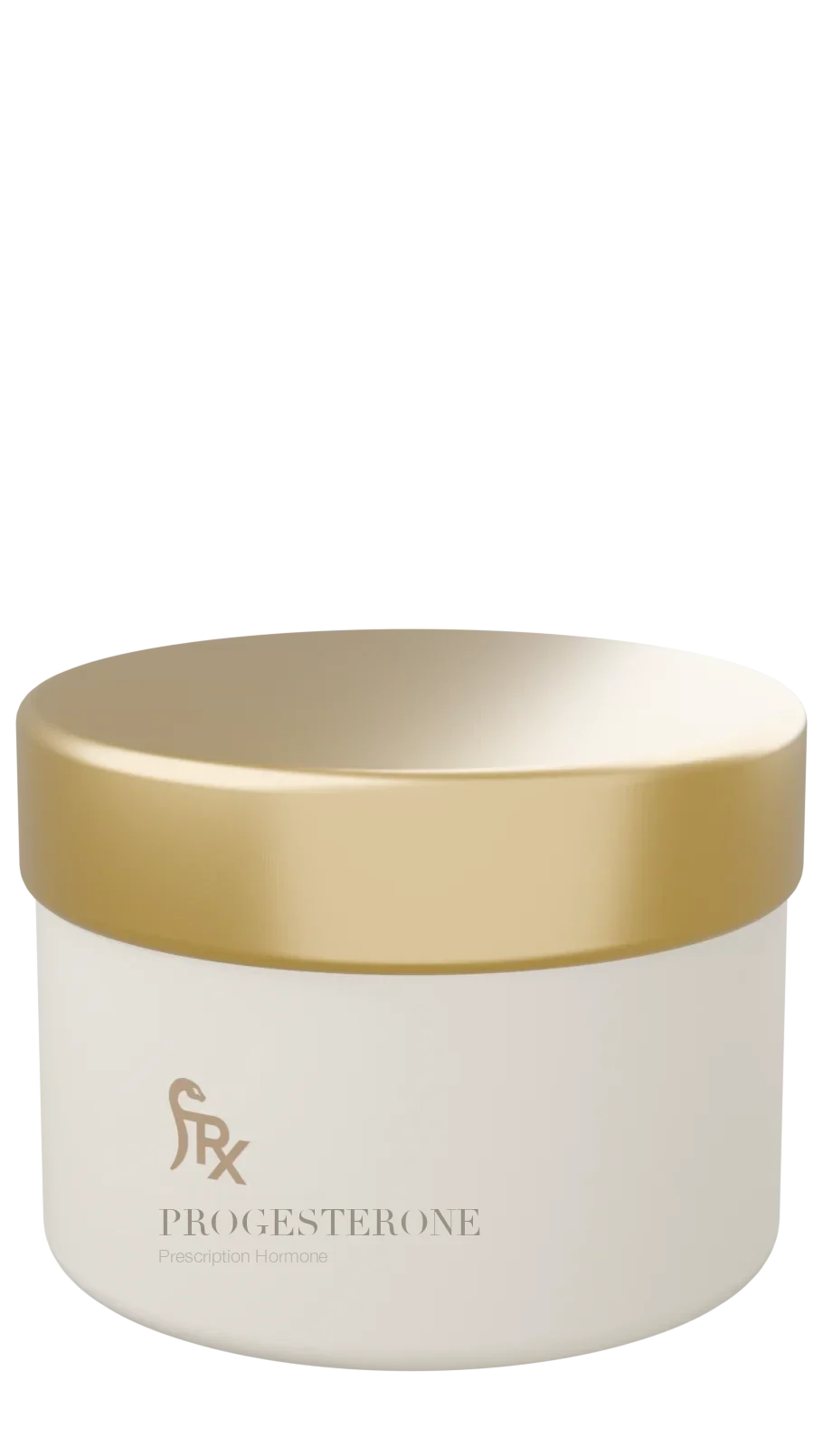
ForbiddenRx progesterone
At a glance
Class
Progestogen hormone
Forms
Capsule · cream
Helps with
Sleep & balance
Dosing
Set by your provider
Guided by
Provider & follow-up
For
Women
The basics

What is progesterone?

The essentials

A prescription female hormone (progestogen)

  • Used in: Women's hormone therapy (HRT)
  • Main role: Protects the uterine lining (oral)
  • Also supports: Sleep & mood balance
  • Forms: Oral capsule, topical cream
  • Dosing set by your provider
  • Compounded option: Available where clinically appropriate
  • Provider-reviewed, monitored over time
Start your online visit →

Progesterone is a female hormone used in women's HRT — most often paired with estrogen, as an oral capsule, to protect the uterine lining. Beyond that protective role, many women find progesterone supports better sleep and a steadier mood.

It comes as an oral capsule — a micronized progesterone capsule — or as a topical cream, with compounded options where clinically appropriate. Your provider chooses the form, dose, and timing based on your symptoms and whether it's paired with estrogen. Only the oral capsule is used to protect the uterine lining; the cream has not been shown to do that.

It's prescribed and monitored by a licensed provider: your history is reviewed before you start, and your dose is adjusted to your response with regular follow-up over time.

Understanding the cause

Why do hormones shift during menopause?

Around perimenopause and menopause, progesterone declines — and its balancing role with estrogen is lost. That shift is behind many of the changes women notice during the transition: disrupted sleep, mood swings, and the loss of the natural counterbalance to estrogen. When estrogen is prescribed and a woman still has a uterus, progesterone is generally added back to protect the uterine lining.

✔Balance is lost, not just estrogen

Progesterone normally partners with estrogen. As it falls, that counterbalance disappears — which is why hormone therapy often restores progesterone alongside estrogen.

✔It's manageable with the right care

Progesterone therapy, prescribed and monitored by a provider, is built to restore that balance — protecting the uterine lining and helping many women rest better.

Know the difference

Prescription progesterone vs. OTC creams — what's the difference?

The short answer: over-the-counter "progesterone" and wild-yam creams are cosmetics with no standardized dose and no proven uterine protection, while prescription progesterone is a pharmaceutical hormone, dosed and monitored by a licensed provider for your situation.

 Wild-yam cream (OTC)"Natural progesterone" cream (OTC)Prescription progesterone (Rx)
What it isHerbal cosmetic creamCosmetic cream, unstandardizedPharmaceutical hormone, provider-dosed
Standardized doseNoNoYes — prepared per prescription
Protects uterine liningNoNot establishedOral capsule: yes, with estrogen
Provider involvedNoNoYes — reviews your health history first
Adjusted to youNoNoProvider sets form, dose, and timing

OTC creams are sold as cosmetics, not medicines — their progesterone content isn't standardized and they aren't a substitute for the uterine protection that prescription progesterone provides during estrogen therapy. A prescription puts a licensed provider in the loop and a known dose in the bottle.

How it works

How does progesterone work in HRT?

It restores the progesterone your body has lost — balancing estrogen, protecting the uterine lining (as an oral capsule) when estrogen is used, and, for many women, supporting calmer sleep.

I

Hormones shift

Around perimenopause and menopause, progesterone declines — and its balancing role with estrogen is lost.

II

Progesterone is added

A prescribed capsule or cream restores progesterone. With estrogen, the oral capsule is the form used to protect the uterine lining.

III

Balance & monitor

Your provider fine-tunes the dose and timing with regular follow-up.

Who it's for

Who is progesterone for?

It's for women navigating the menopause transition — especially those on estrogen who still have a uterus, and those whose sleep or mood has shifted with their hormones.

✔Perimenopause or menopause symptoms

The hormonal transition where progesterone declines and its balancing role with estrogen is lost.

✔On estrogen and still have a uterus

When estrogen is prescribed and you still have a uterus, progesterone is generally added to protect the uterine lining.

✔Restless nights during the transition

Many women find oral progesterone supports calmer sleep.

✔Mood changes tied to hormonal shifts

As progesterone falls, mood can suffer. Provider-guided therapy is built to help restore that balance.

✕When it's not the right fit

If your main goal is estrogen replacement for hot flashes and dryness, Estradiol may be the better starting point. And if you are or could be pregnant, or have unexplained vaginal bleeding or other undiagnosed symptoms, those need evaluation before starting any hormone therapy — mention them in your visit.

How to get it

How do I get progesterone online?

You complete a private online visit, a licensed provider reviews it, and — if appropriate — your prescription ships to your door. No insurance required, no in-person appointment, no waiting room.

Complete your online visit

Share your symptoms, sleep, and health history so a provider understands your goals and the full picture.

Provider review

A provider licensed in your state reviews your information and, if appropriate, prescribes progesterone at a starting form and dose.

Discreet delivery

Shipped from a U.S. pharmacy in plain, unmarked packaging, with refills to keep you on schedule. Questions? Email or call our support team.

The price above includes your provider visit and medication. This treatment also requires a lab panel ($129 at Quest, chosen at checkout) or recent labs you upload. No insurance needed.

Using it & safety

How is it taken, and is it safe?

Progesterone comes as an oral capsule or a topical cream. The amount and the schedule are set by the provider who reviews your visit. We deliberately do not publish a dosing regimen here, because that is a clinical decision about you, not a product specification. Hormone therapy is provider-guided and monitored throughout.

Forms & how it's taken

Oral capsule
A micronized progesterone capsule. It can cause drowsiness.
Cream
A topical progesterone applied to the skin. It has not been shown to protect the uterine lining.
Dose & schedule
Set and adjusted by your provider based on your symptoms and follow-up. Follow the directions on your label.
With estrogen
If you take estrogen and have a uterus, oral progesterone is the form used to protect the uterine lining.
Oral capsuleCreamCompounded optionsProvider-set

Safety & side effects

⚠ Can cause drowsiness

Oral progesterone commonly causes drowsiness — don't drive or operate machinery until you know how it affects you. Progesterone therapy is provider-guided and monitored, and isn't right for everyone — tell your provider your full personal and family history before starting.

Possible side effects your provider watches for:

  • Drowsiness or dizziness
  • Breast tenderness
  • Bloating
  • Headache
  • Mood changes

Tell your provider about all conditions and medications, and follow up so your dose can be adjusted to your response. Seek care for chest pain, shortness of breath, leg swelling, or a sudden severe headache.

Compare your options

Which hormone therapy fits you?

A side-by-side look at the hormone therapies available through ForbiddenRx. Your provider helps you choose what's right for your symptoms and history.

TreatmentWhat it isFocusFormForRx required
ProgesteroneOral progesterone protects the uterine lining with estrogenUterine protection (oral)Capsule / creamWomenYes
EstradiolThe primary estrogen in menopausal hormone therapyHot flashes & drynessCream · troche · patchWomenYes
BIESTA compounded blend of two estrogens (estriol + estradiol)Menopausal symptom reliefTopical creamWomenYes
Vaginal EstrogenLow-dose local estrogenVaginal dryness & comfortCream / insertWomenYes
Questions, answered

Progesterone FAQ

What is progesterone and am I a candidate?

Progesterone is a female hormone used in women's HRT — most often paired with estrogen, as an oral capsule, to protect the uterine lining. You may be a candidate if you're in perimenopause or menopause, or if you're prescribed estrogen and still have a uterus. A licensed provider reviews your symptoms and history to decide whether it's appropriate for you.

Why is progesterone taken with estrogen?

When estrogen is prescribed and you still have a uterus, a progestogen is added to protect the uterine lining; oral micronized progesterone is the form used for this, and progesterone cream has not been shown to provide that protection. If you've had a hysterectomy, your provider will decide whether progesterone is needed.

Does progesterone help with sleep?

Many women find that oral progesterone supports calmer sleep. Responses vary from person to person — your provider tailors the form, dose, and timing to your goals.

Capsule or cream — which is better?

If you take estrogen and have a uterus, the oral capsule is the form used to protect the uterine lining; progesterone cream has not been shown to provide that protection. Otherwise, your provider recommends the form that fits your routine.

What are the side effects and how is it monitored?

Possible side effects include drowsiness, dizziness, breast tenderness, bloating, and mood changes. Because hormone therapy carries individual risks and benefits, it is provider-guided and monitored — your provider reviews your history, adjusts your dose, and follows up over time.

How is it prescribed and shipped?

After your online visit, a licensed provider reviews your information. If progesterone is appropriate, your prescription — an oral capsule or a cream, with compounded options available — ships discreetly to your door in unmarked packaging, with refills to keep you on schedule. Prescription approval is not guaranteed and is subject to provider review.

Credibility you can verify

Care held to a higher standard

Licensed Providers

Licensed in your state

503A Pharmacies

Licensed compounding

All 50 States

Confirmed at intake

Explore more

Also in hormone health

Rest and balance, restored

Complete a quick online visit about your symptoms and sleep. A licensed provider reviews your history and, if appropriate, your progesterone therapy ships discreetly to your door.

Start your online visit →

  • Discreet, unmarked packaging
  • Refills so you never miss a scheduled dose
  • Questions? Email or call our support team
  • Licensed providers in all 50 states
Sources

Sources & references

Written by ForbiddenRx and checked against FDA prescribing information and published sources · Updated October 2026. It is general information, not a review of your own health; your provider decides what is right for you. It is provided for general educational purposes and is not a substitute for professional medical advice, diagnosis, or treatment. Always talk with a licensed provider about your individual health.

  1. U.S. Food & Drug Administration. Drugs@FDA — progesterone prescribing information.
  2. The Menopause Society (formerly NAMS). Position statement on the use of hormone therapy in menopause.
  3. American College of Obstetricians and Gynecologists (ACOG). Hormone therapy and the management of menopausal symptoms — patient guidance.
  4. MedlinePlus. Progesterone — Drug Information.
For further reading

Clinical references

This page is educational and is not medical advice.